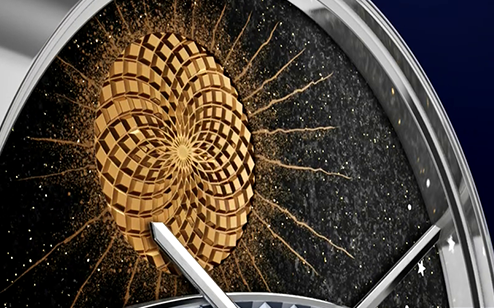
“A new way of co-creating, born from much faster pre-production.”

A letter from Lore & Lumière, a real-time 3D studio. An object that can be turned, opened, illuminated: what remains is to compose what happens when it is manipulated. This letter is dedicated to that specific form of writing: that of interaction, exploration, encounter, and contempl’action.
“Designing interactivity used to require weeks of work with specialized developers. Today, we adjust it during the session, until the scene responds just right.“
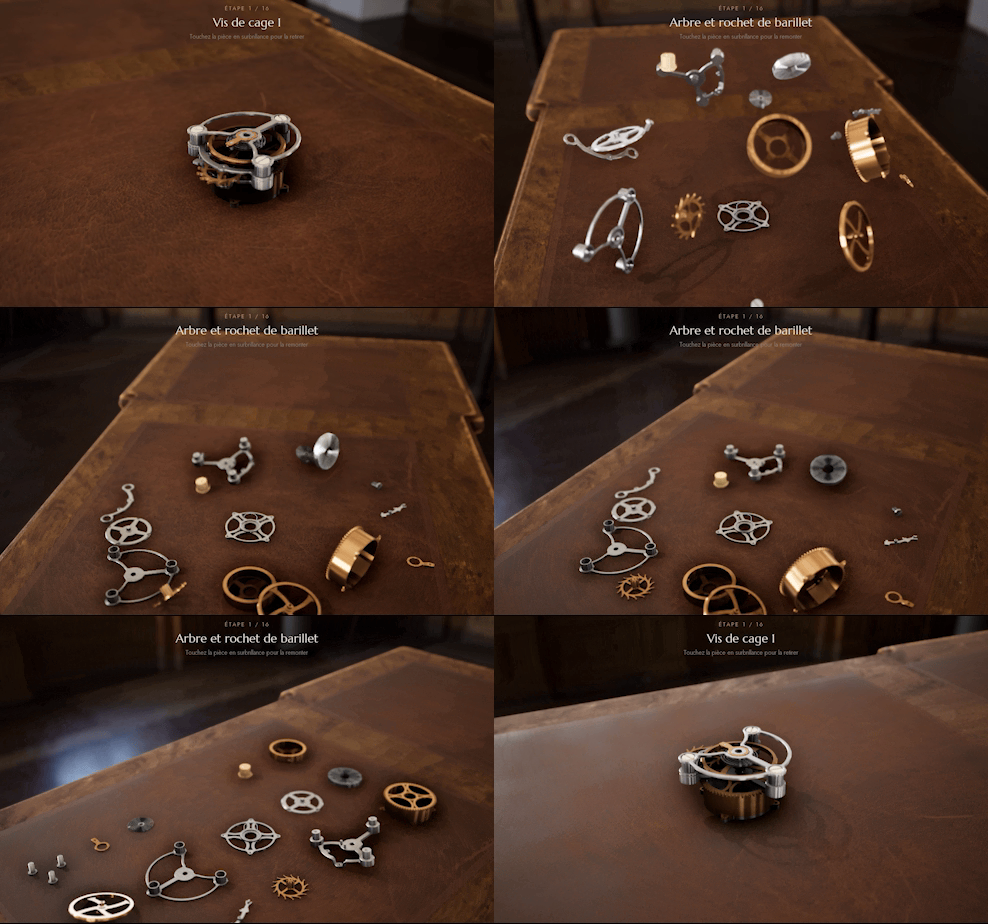
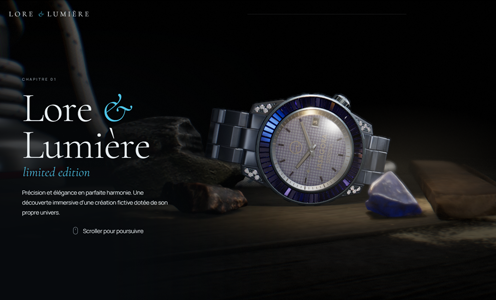
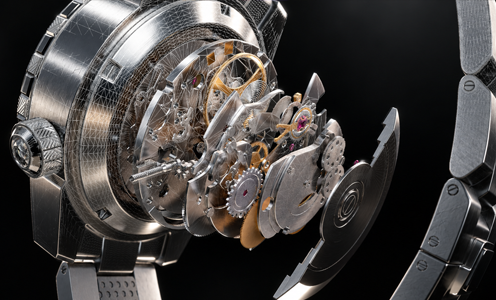
This is what we are building at Lore & Lumière: interactive digital twins for jewelry, watchmaking, or high-tech industries, faithful down to their micro-imperfections, which can be manipulated like the real object.
Until now, an interaction was designed on paper before being tested, then discovered weeks later. The back-and-forth to refine it represented up to 80% of the effort.
A new pre-production method changes this order: a staging idea formulated in the morning is played out in the afternoon, in front of everyone who imagined it.
At Lore & Lumière, it is not just about going faster. It is an opportunity to imagine together, with the Houses, ideas that we would not have dared to formulate.
01
We no longer think technique
We no longer think technique, we think visitor journey. In any studio, ideas are already sorted by their cost: one does not dare to propose “what if the light followed the gaze” when that represents weeks of development.
When an intention is prototyped in the afternoon, this silent sorting disappears.
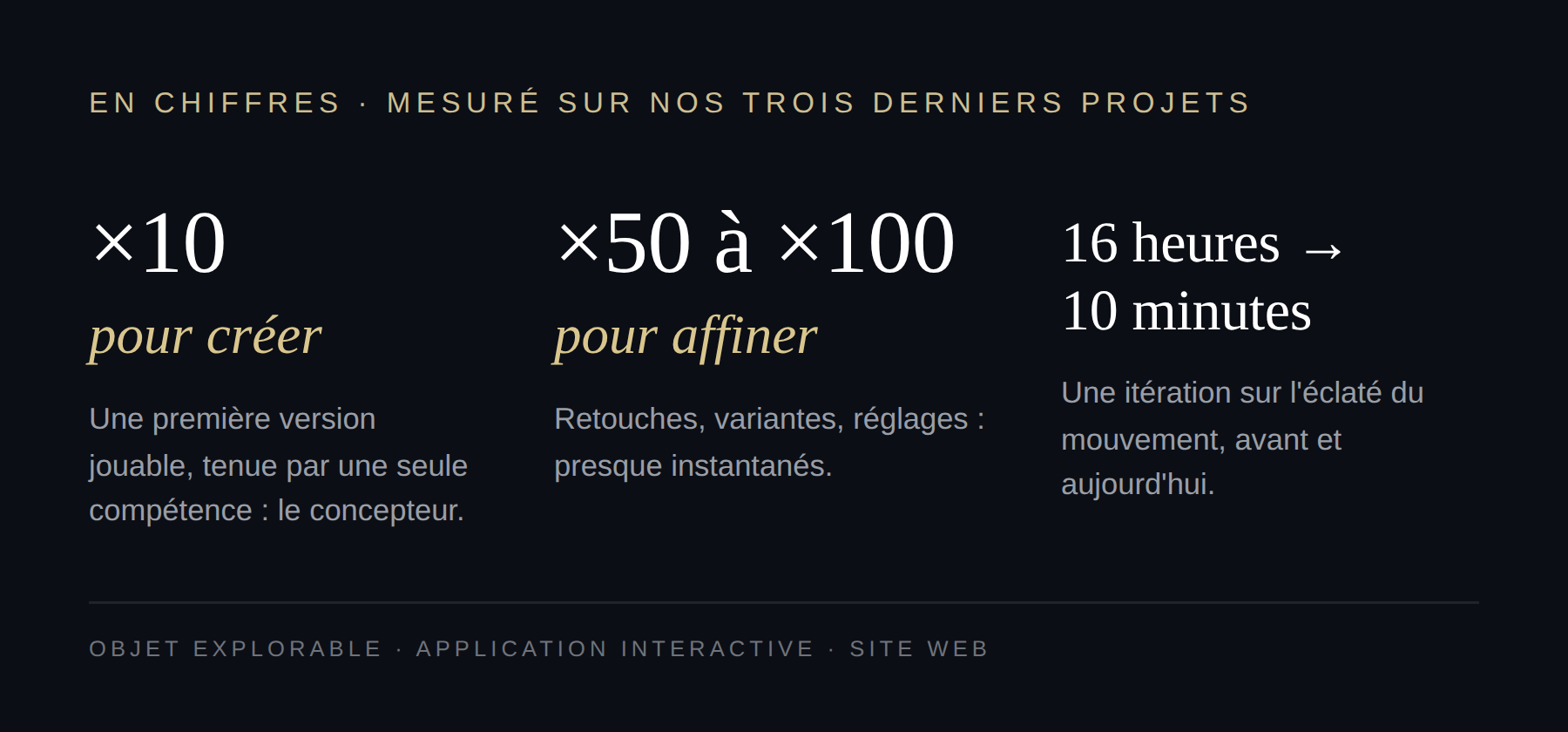
What we are measuring on our last three projects: ten times faster for a first playable version, fifty to a hundred times faster to refine it.
02
Co-imagining the impossible
A House invites one to enter. Interaction is a gesture of encounter, an open door to the brand’s imagination: the visitor contemplates, acts, and the world adjusts to them.
When the time to create is no longer the issue, we allow ourselves ideas we did not dare to formulate. Thirty tiny details, once too costly to even be proposed, bring to life a scene that captivates a little more with every gesture.
03
The hand and the machinery
Our requirement is summed up in one sentence: everything one looks at has been drawn, modeled, and lit by hand. Technical tools only intervene in the machinery of the scene: the choreography of movement, the kinematics of the gears, the transitions.
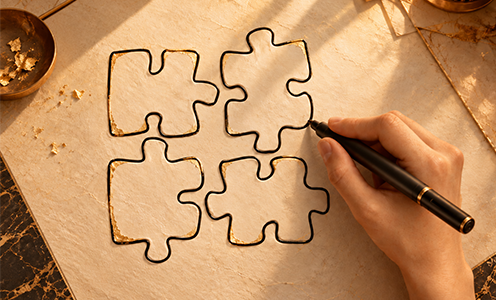
Each material, each piece retains its author and its provenance. In the theater, the stagehand rotates the set; he does not paint the canvas and does not direct the actors.
04
Discernment
When trying becomes simple and fast, the rare resource becomes taste. The one who designs is no longer a technical specialist, but a conductor: he judges, discards, and keeps only the staging that serves the House’s narrative.
Creative freedom is not being able to do everything. It is finally being able to choose.