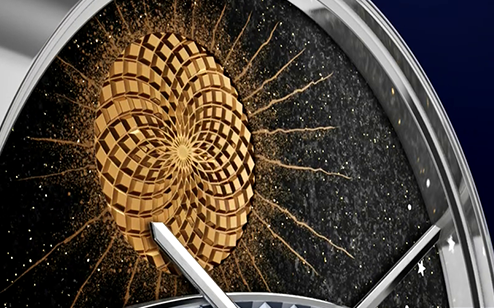
“Interactivity emerges as the natural destination of twenty years of evolution: working with virtual matter, following in the footsteps of artisan jewelers who create emotions.”
Jean-Stéphane Beetschen, Lighting & Rendering Supervisor.
In 3D imaging, real-time has served several disciplines. Video games, the creation of pre-rendered images, and interactivity, with ever-increasing artistic possibilities, are finally achieving a quality I have been anticipating for twenty years.
The true revolution lies in the technical legacy of video games, which enables new emotional and sensory experiences. Touching, rotating, and configuring one’s virtual object instead of merely watching it in a film.
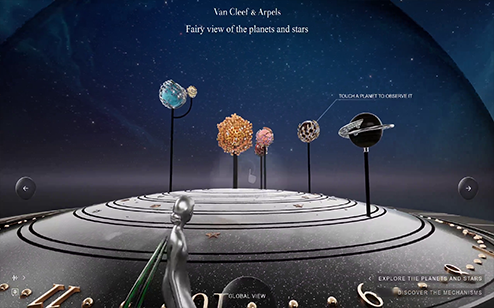
This is what we are building at Lore & Lumière: interactive digital twins for jewelry, watchmaking, or high-tech industries, faithful down to their micro-imperfections, which can be manipulated like the real object.
01
Waiting for Images

“I spent the first half of my career waiting for images.”
Jean-Stéphane Beetschen, Lighting & Rendering Supervisor.
Pre-rendered work is a waiting game. You light blindly, launch the rendering farm, discover the result the next day, correct, and relaunch. Talent largely consists of anticipating what you cannot yet see. It is a demanding school, and I do not disown it: it taught me to read an image before it even existed.
02
The Shift
Then real-time matured, gradually, not as a marketing promise but as a change in the approach to work. The working environment of video game engines became more user-friendly, notably with the arrival of Unity and, especially, Unreal Engine.
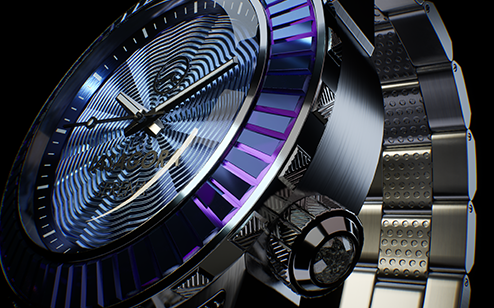
You move a light source in virtual space, and the reflection on the watch case follows, just like in a photo studio. You modify a material, and the render is immediately there. The loop that used to take a night now takes a second.
However, reducing this shift to a mere gain in speed would be missing the essential point. An image calculated in one-sixtieth of a second is no longer just a faster image: it is an image that can respond. First, to the artist’s gesture, then to the viewer’s.
03
What Interactivity Changes
Today, the question “pre-rendered or real-time?” is more relevant than ever. For a shot intended to be viewed, pre-rendered still holds the advantage for ultimate pixel-perfect quality. However, real-time is closing this gap year by year. The real divide is now elsewhere: between the image one watches and the object one interacts with.
Today, the question “pre-rendered or real-time?” is more relevant than ever. For a shot intended to be viewed, pre-rendered still holds the advantage for ultimate pixel-perfect quality. However, real-time is closing this gap year by year. The real divide is now elsewhere: between the image one watches and the object one interacts with.
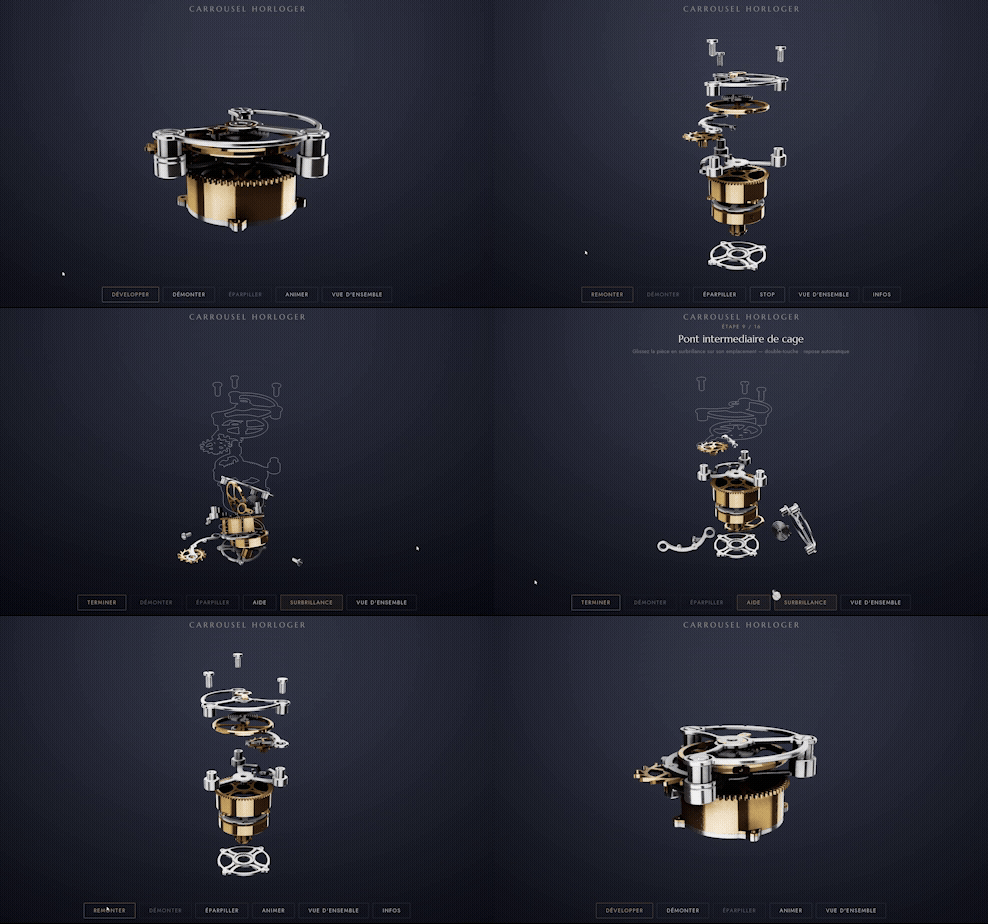
A film, however beautiful, imposes its point of view, its framing, its duration. An interactive digital twin, however, gives control back to the viewer: rotating the piece, zooming in on the setting, changing the gold hue, switching from daylight to evening. Changing the environment. Making the object float in space or in a dense forest. What luxury used to sell through imagery, it can now make experienced through gesture, decided by the user. And no rendering farm can pre-calculate that: interactivity demands real-time, by definition.
This also changes production itself. A jewelry house is not looking for a render; it is looking for a decision. Which gold hue, which angle, which light, which setting variation. In pre-rendered, each hypothesis costs a production cycle: three are explored, and the least bad is chosen. In interactive, thirty can be explored in a session, with the artistic director in the room. And tomorrow, the end customer will explore it themselves.
04
Working with Matter
Following this reasoning, at Lore & Lumière, our interactive digital twins for jewelry, high watchmaking, or high-tech industries are enriched with micro-imperfections once reserved for pre-rendered content (commercial films). These are now possible in real-time, invisible in appearance but faithful to the real object, and they restore, as much as the interface allows, the emotion provided by the original. Because an object that is manipulated forgives nothing: unlike a film, where only its best angles are shown, interactivity exposes the piece to every possible view. Fidelity is no longer an aesthetic choice; it is a condition.